Blog has moved, searching new blog...

Showing posts with label contemplative prayer. Show all posts

Monday, November 1, 2010

The Embrace of Contemplative Spirituality in the (Post)Modern Church


By Justin Edwards

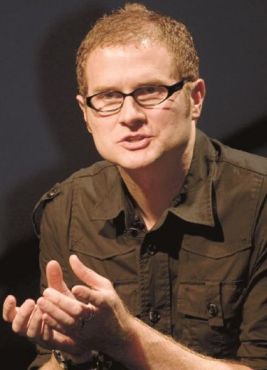
Lighthouse Trails Research has just posted a revealing article illustrating the extent to which contemplative spirituality and mysticism (CSM) has infiltrated the evangelical church. In a new book titled, The Big Book of Christian Mysticism, author Carl McColman explains there is no distinction between Christian mysticism and non-Christian mysticism. Proponents of contemplative prayer include Brian McLaren, Leonard Sweet, Tony Campola, Richard Rohr, Richard Foster, Dallas Willard, Rob Bell, and Phyllis Tickle who embrace the teachings of mystics Thomas Merton, Brennan Manning, Henri Nowen, and Brother Lawrence. However, you might be surprised to learn popular teachers such as Rick Warren, Beth Moore, Mark Driscoll, Bill Hybels, Max Lucado, John Ortberg, and even a major Christian empire like Focus on the Family endorse these practices.

Please take the time to see how these share a common thread in contemplative spirituality by clicking on the following link to the LHTR blog: Brian McLaren and Richard Foster’s Editorial Team Agree with Lighthouse Trails – Contemplative Prayer and Eastern Mysticism Are Same Thing

The article closes with this bottom line and offers the concluding p.s.:

To those who know and embrace the glorious Gospel of Christ, there can be no fellowship with religions that reject the very foundation of the biblical Christian faith. Something is radically wrong when someone who claims to be a Christian has a sense of solidarity with someone who has a view that man is divine (i.e., man is God). Shear logic should point out the truth of what we are trying to say. Lighthouse Trails’ hope is that you look at this issue with an open mind and honest discernment. The truth is in plain view.

P.S. If you have had family members or friends who have rejected or ridiculed you for speaking up against contemplative spirituality (i.e., spiritual formation), show them this article.

This is that important. You might also want to check out the following post that lists common buzzwords and major proponents of CSM:  Emergence Christianity - Naming Names and Providing Terms. Please don't sweep this under the rug or brush it off and accuse these matters as legalism. The visible church is very sick, and it's a blaring indication that Jesus Christ is coming for His True Church soon. What we are witnessing is the falling away of the church (2 Thessalonians 2:3), and we must arm ourselves with the whole armor of God and defend the Gospel of the Lord Jesus Christ. Deception is running amok, and it's imperative we cling to sound doctrine, never compromising the truth.

Please heed the warnings.

Monday, August 16, 2010

Beth Moore et al and Contemplative Prayer


By Lighthouse Trails Research Editors


In the August 2010 cover story of Christianity Today, the magazine has brought out two things that the major Christian media has thus far ignored – one, that Beth Moore, described as “the most popular Bible teacher in America”  by CT is a proponent of contemplative prayer, and two, that there is a debate over whether contemplative meditation is of Eastern religious origin or not. This Lighthouse Trails special report will look at both of these facets, Beth Moore’s contemplative propensities (incidentally, she is noted in CT  for influencing “millions” of women) and the vital question as to whether contemplative prayer is indeed rooted in Eastern mysticism.

Christianity Today hit the nail right on the head when it informed its readers that:

“Critics argue that contemplative prayer is rooted in Eastern mysticism and thus not a practice that Christians should engage in.”

Lighthouse Trails has always warned that contemplative prayer is in fact rooted in Eastern mysticism, with a heavy emphasis on the word “rooted.” In Ray Yungen’s book, A Time of Departing, Yungen brings out that contemplative prayer was created by the Desert Fathers, a group of monks who lived in the desert during the early middle ages. Quoting Ken Kaisch, A Time of Departing reveals:

It was a time of great experimentation with spiritual methods. Many different kinds of disciplines were tried, some of which are too harsh or extreme for people today. Many different methods of prayer were created and explored by them. (Finding God, p. 191).
At the time, the city of Alexandria, close to where the Desert Fathers existed, was a stronghold of Eastern mysticism through the connection of King Alexander’s link to India. It is believed that the Desert Fathers utilized Eastern style meditation practices (i.e., mantra meditation), but instead of using Hindu or Buddhist mantras, they tailored this Eastern style prayer to their Christian beliefs, using “Christian” mantras. As an early treatise on contemplative prayer written by an anonymous monk, The Cloud of Unknowing, describes:  ”Take just a little word, of one syllable rather than of two . . . With this word you are to strike down every kind of thought under the cloud of forgetting.” This is why all the major icons of contemplative prayer (Thomas Merton, Thomas Keating, Henri Nouwen, etc) echo the same spiritual perceptions as Eastern meditation practitioners. Thomas Merton said as he was leaving on a trip to South Asia to address Hindu and Buddhist monks: ” We left the ground– I with Christian mantras and a great sense of destiny, of being at last on my true way after years of waiting and wandering … I am going home, to the home where I have never been in this body. ” (Merton’s Asian Journal, pp. ). Henri Nouwen echoed this when he said that Hinduism, Buddhism, and the Muslim (i.e., Sufism) religion offered many treasures for the spiritual life of the Christian (in the foreword of Thomas Ryan’s Disciplines for Christian Living). 

For those who are still skeptical, the co-founder of one of the largest centers for teaching contemplative prayer, Tilden Edwards of The Shalem Institute, said that contemplative prayer is “the Western bridge to Far Eastern spirituality” (Edwards, Spiritual Friend, p. 18). How much more clear can this be? We could go on and on to verify the link between Eastern religion and contemplative spirituality. We have documented over 200 pages in A Time of Departing, not to mention article after article with continued documentation.

Returning to Beth Moore, while it may come as a surprise to many Christianity Today readers that Moore is being identified with contemplative “mysticism,” it is no surprise to Lighthouse Trails because in the spring of 2006, Moore was included in our coverage of a Fox Home Entertainment film titled Be Still,* an infomercial for contemplative spirituality.  Shortly after the DVD was released, Lighthouse Trails spoke with Moore’s personal assistant who said that Moore did not have a problem with Richard Foster or Dallas Willard’s teachings. To reiterate this, Living Proof Ministries issued a  statement a few weeks after the release of the DVD that stated: “[W]e believe that once you view the Be Still video you will agree that there is no problem with its expression of Truth.” Living Proof offered to send a free copy of the DVD to anyone who receives their email statement and wishes to view the DVD, saying that, “[I]t would be our privilege to do this for you to assure you that there is no problem with Beth’s participation in the Be Still video.” This statement was issued because several women contacted Moore’s ministry after reading the Lighthouse Trail report on the Be Still DVD.

In the Be Still DVD, countless enticements, references, and comments clearly show its affinity with contemplative spirituality. For instance, Richard Foster says that anyone can practice contemplative prayer and become a “portable sanctuary” for God. This backs up other statements by Foster over the course of the past thirty years in which he believes that even a non-believer in Christ can participate in the “spiritual discipline” of silence and have an encounter with God. The assumption by all mystics is that God dwells in all people, and meditation will help them to realize their own Divinity. This panentheistic view of God is very typical for contemplatives. As Ray Yungen points out, those who practice contemplative prayer begin to view God through panentheistic (God in all) and interspiritual (all is united) eyes. Thomas Merton, whom Foster has admired publicly for many years, believed that all human beings have divinity within, and this divinity can be accessed through contemplative prayer, thereby making the Cross of Jesus unnecessary for union with God. We believe that the reason for this change in spiritual outlook for those who continue practicing contemplative meditation (i.e., mantra-like meditation) is that these altered states of consciousness actually engage the practitioner with demonic realms leading to spiritual deception.

The underlying theme of the Be Still DVD is that we cannot truly know God or be intimate with Him without contemplative prayer and the state of silence that it produces. While the DVD is vague and lacking in actual instruction on word or phrase repetition (which lies at the heart of contemplative prayer), it is very misleading, to say the least. What they don’t say in the DVD is that this state of stillness or silence is, for the most part, achieved through some method such as mantra-like meditation. The purpose of the DVD, in essence, is not to instruct in contemplative prayer but rather to make you and your family hungry for it. The DVD even promises that practicing the silence will heal your family problems.

The thoughtful and discerning Christian needs to ask whether the Be Still DVD is an accurate “expression of Truth,” as Beth Moore says it is, and is there truly “no problem with Beth’s participation” in this project? Considering the fact that Christianity Today calls Moore “the most popular Bible teacher in America,” these are fair questions to ask. Moore has the potential of leading  millions of women in a spiritually dangerous direction. Those women in turn will bring this mystical teaching home to their husbands, children, and churches. In the Be Still DVD, Moore states: “[I]f we are not still before Him [God], we will never truly know to the depths of the marrow of our bones that He is God. There’s got to be a stillness.” Moore says that it is not possible to “truly know” that He is God without “a stillness.” She is not talking about a quiet place to pray and spend time in God’s word, but rather she is talking about a stillness of the mind – this is what contemplatives strive for – unless you practice this stillness of the mind, your relationship with the Lord is inadequate. According to Beth Moore, you don’t even know Him in the way you should.

Many reading this may be asking, is there any other evidence as to where Moore really stands with regard to contemplative. The answer to that may at least partially be found in a book she wrote in 2002 called When Godly People Do Ungodly Things. In a section about “Unceasing Prayer,” Moore states:

I have picked up on the terminology of Brother Lawrence [a Carmelite mystic who said he "cried out, singing and dancing  violently like a madman" when he went into the "presence"1], who called praying unceasingly practicing God’s presence. In fact, practicing God’s presence has been my number one goal for the last year. (p. 109)
Moore says: “A head full of biblical knowledge without a heart passionately in love with Christ is terribly dangerous–a stronghold waiting to happen. The head is full, but the heart and soul are still unsatisfied” (p. 60). This language is very indicative of contemplatives and echoes Richard Foster who said we have become barren within or Rick Warren who says the church is not fully mature without spiritual formation ala Foster and Willard (i.e., contemplative prayer)  (The Purpose Driven Church, p. 126-127 ). However, all of this talk leads one to think that the Word of God is little more than a philosophy and needs the help of contemplative prayer to be effective at all. The insinuation is that the Holy Spirit is dormant and ineffective without this vital stimuli.  Contemplatives are making a distinction between studying and meditating on the Word of God versus loving Him, suggesting that we cannot love Him or know Him simply by studying His Word or even through normal prayer–we must practice contemplative to accomplish this. But the Bible makes it clear that the Word of God is living and active, and it is in filling our minds with it that we come to love Him and know Him, not through a mystical practice that is never once mentioned in the Bible, except in warnings against vain repetitions (Matthew 6:7) and Old Testament warnings against seeking to make contact with the spirit world or going into altered states of consciousness (Deuteronomy 18:11).

In Moore’s book, she makes frequent references to contemplative pioneer Brennan Manning, stating that his contribution to “our generation of believers may be a gift without parallel” (p. 72). This is indeed a troubling statement made by “the most popular Bible teacher in America.”  No doubt, many of the women who follow Moore, in reading her comments about Manning and her quoting of him have turned to the writings of Manning for further insights. Why wouldn’t they when their favorite Bible teacher speaks so highly of him? When they do turn to him, they will find that Manning is a devout admirer of Beatrice Bruteau, founder of  The School for Contemplation. Bruteau wrote the foreword to a book called The Mystic Heart by New Age mystic Wayne Teasdale, a book that actually lays out that contemplative prayer will unite Christianity with all the world’s religions at a mystical level. And yet, in Manning’s book, Abba’s Child, he says that Bruteau is a “trustworthy guide to contemplative consciousness.”  Manning  backs his love for “contemplative consciousness” by stating the following:

[T]he first step in faith is to stop thinking about God at the time of prayer. (The Signature of Jesus, p. 212)

Choose a single, sacred word or phrase that captures something of the flavor of your intimate relationship with God. A word such as Jesus, Abba, Peace, God or a phrase such as “Abba, I belong to you.” … Without moving your lips, repeat the sacred word inwardly, slowly, and often. (SoJ, p. 218)

When distractions come, … simply return to listening to your sacred word…. [G]ently return [your mind] to your sacred word. (SoJ, p. 218)

[E]nter into the great silence of God. Alone in that silence, the noise within will subside and the Voice of Love will be heard. (SoJ, p. 218)
This is the contemplative prayer that Beth Moore is promoting – Manning’s contemplative prayer. Furthering Beth Moore’s great admiration for Manning, she quotes him from his book Ragamuffin Gospel calling the book “one of the most remarkable books” (p. 290) she has ever read. But it is this very book that reveals Manning’s true affinity with contemplative spirituality. In the back of the book, Manning makes reference to Catholic priest and mystic Basil Pennington saying that Pennington’s methods will provide us with “a way of praying that leads to a deep living relationship with God.” However, most assuredly Pennington’s methods of prayer draw from Eastern religions. In his book, Finding Grace at the Center, Pennington says:

We should not hesitate to take the fruit of the age-old wisdom of the East and “capture” it for Christ. Indeed, those of us who are in ministry should make the necessary effort to acquaint ourselves with as many of these Eastern techniques as possible. Many Christians who take their prayer life seriously have been greatly helped by Yoga, Zen, TM and similar practices. (from A Time of Departing, 2nd ed., p.64, quoting Finding Grace at the Center, pp. 5-6)
Pennington also says that the Holy Spirit is the soul of the human family (Centered Living, The Way of Centering Prayer, p. 104).

In Ragamuffin Gospel, Manning cites Carl Jung as well as interspiritualists and contemplative msytics, Anthony De Mello (see note below), Marcus Borg (denies the Virgin birth and Jesus being Son of God), Morton Kelsey, Gerald May, Henri Nouwen, Annie Dillard, Alan Jones (who denies the atonement), Eugene Peterson, and goddess worshipper Sue Monk Kidd. This is a list of mystics that any discerning Bible teacher would never point followers to either directly or indirectly!

For Moore to call Manning’s book “remarkable” and to say his contribution to this generation of believers is “a gift without parallel” leads one to conclude that Beth Moore has absorbed Manning’s spirituality. And if that is the case, which we believe it to be, then Moore, as nice and well intentioned as she may be, has become another conduit for a panentheistic spirituality.

 What makes the Christianity Today’s August issue noteworthy is that this is the first time to our knowledge since the beginning of Lighthouse Trails in 2002 where a major Christian media has publicly recognized that there is a “debate” going on about contemplative spirituality (i.e., spiritual formation). While they did not identify  Lighthouse Trails as one of the “critics” of this debate, nevertheless they have  helped to bring it to the table and give it a broader platform. We would like to note here that over the past eight years thousands of believers have contacted Lighthouse Trails and do see what is taking place. This is not just something that only a handful of people see, albeit a minority in the church.

Lighthouse Trails sincerely implores Beth Moore and all Christian leaders going in the contemplative direction to take an honest look at the evidence that contemplative prayer IS rooted in Eastern mysticism. Nothing else explains the affinity that so many practitioners have for Hinduism, Buddhism, and Sufism. As Merton told a Sufi teacher, “My prayer tends very much to what you call fana” (Thomas Merton, My Brother, Pennington, p. 115). Fana is the same as Hindu Samadhi and Buddhist nirvana. Merton went on to explain how mystical meditation even eclipses the need to believe in Jesus’ atoning and saving work on the Cross. To the Sufi teacher, Merton stated:

Personally, in matters where dogmatic beliefs differ, I think that controversy [“the doctrine of atonement or the theory of redemption,” said the Sufi teacher] is of little value because it takes us away from the spiritual realities into the realm of words and ideas . . . . But much more important is the sharing of the experience of divine light, . . . It is here that the area of fruitful dialogue exists between Christianity and Islam. (Merton and Sufism, p. 109)
It is essential to grasp the significance of what is being said here: Merton believed that the doctrines that are the essence of Christianity (such as atonement and salvation) were irrelevant and actually, if taken seriously, were an  impediment to religious unity. The complete union of all the world’s religions cannot be accomplished  without a form of mysticism within Christianity-that form is contemplative prayer, the very thing that a growing and large number of Christian leaders are propagating today!

It is this that motivates Lighthouse Trails to continue issuing a warning. We are not haters, as some have supposed; in fact we love people,( including those who promote contemplative prayer) and feel compelled to warn them about the spiritual land mines buried within the mystical paths on which they have embarked.

Footnote:

1. The Practice of the Presence of God by Brother Lawrence, translated by John Delaney, Image Books, 1977, p. 34


Note: The writer of the Christianity Today article, “First Came the Bible,” is Halee Gray Scott, a writer and a faculty member at Wesley Seminary and A. W. Tozer Theological Seminary. She is a Ph.D. candidate at Talbot School of Theology, where her research interests include leadership development and spiritual formation.

Many of the quotes in this report are taken from A Time of Departing. Click here for information on A Time of Departing by Ray Yungen.

Also read: Richard Foster and the Be Still DVD
*To view a transcript of the entire Be Still DVD, please contact us.

Quote by ANTHONY DEMELLO ON CONTEMPLATIVE SILENCE:

To silence the mind is an extremely difficult task. How hard it is to keep the mind from thinking, thinking, thinking, forever thinking, forever producing thoughts in a never ending stream. Our Hindu masters in India have a saying: one thorn is removed by another. By this they mean that you will be wise to use one thought to rid yourself of all the other thoughts that crowd into your mind. One thought, one image, one phrase or sentence or word that your mind can be made to fasten on. Anthony de Mello, Sadhana: A Way to God (St. Louis, the Institute of Jesuit Resources, 1978), p. 28.

(HT: Lighthouse Trails Research)

Tuesday, August 3, 2010

Christian or Christ-follower?


From Lighthouse Trails Research


Christian or Christ-follower. It’s a distinction that is being made more and more today, and often the latter term, Christ follower, is replacing the former term, Christian. Even many Christian leaders are making the switch. But just what does it mean? Emerging church leader, Erwin McManus says his “goal is to destroy Christianity as a world religion and be a recatalyst for the movement of Jesus Christ.” In McManus’ book, The Barbarian Way, he talks about being “awakened” to a “primal longing that … waits to be unleashed within everyone who is a follower of Jesus Christ.” McManus says that the “greatest enemy to the movement of Jesus Christ is Christianity [i.e., Christians].” A video series on YouTube.com called “Christian No More” (by Christian Community Church) exemplifies this view by portraying those who call themselves Christians as shallow church-goers who wear suits and ties, have Christian bumper stickers on their cars and prefer the King James Version. This belittling video is evidence that it is increasingly more popular to call oneself a Christ follower rather than a Christian.

Interestingly, most of the leaders who seem to be downplaying the name Christian and promoting the appropriation of the term “Christ follower” are contemplative spirituality proponents. One contemplative advocate, Rick Warren, had the term throughout his former pastors.com website. Lee Strobel refers to it in his book Case for Christ (Student Edition), and Wesleyan pastor David Drury has a Christ-Follower Pop Quiz on his web site to help determine if you are really a “Christ Follower.”

This theme of anti-”Christian” sentiment is not going to disappear any time soon. In emerging church leader and labyrinth promoter Dan Kimball’s book called, “They Like Jesus, But Not the Church,” the idea is that you can go for Jesus, but you don’t have to identify yourself as a Christian or part of the Christian church. This concept spills over into some missionary societies too, where they teach people from other religions that they can keep their religion, just add Jesus to the equation. They don’t have to embrace the term “Christian” (see The New Missiology).

So what’s the problem? So what if you want to be a Christ follower instead of a Christian. Well, the problem, when identified, will show you why the Spiritual Formation movement (which is promoted by Purpose Driven, Willow Creek, the emerging church, etc) is so dangerous and misleading.

Let us explain. If you have researched the teachings of contemplative authors, you may have noticed a common message. That message says: If you want to be like Christ, then practice these certain disciplines and you can be like Him. Chuck Swindoll bought into this when he wrote his book, So You Want to Be Like Christ: Eight Essential Disciplines to Get You There. But Swindoll exalts one particular discipline – the silence. In fact, he goes so far as to say you can’t become a deep, meaningful Christian without it. Beth Moore, in the pro-contemplative film, Be Still, says: “[I]f we are not still before Him [God], we will never truly know to the depths of the marrow of our bones that He is God. There’s got to be a stillness.” And this is what contemplatives teach. The one common thread woven throughout spiritual formation teachings is that the silence and being a Christ follower are practically synonymous. You can’t have one without the other. And of course, this silence is induced through meditative practices such as centering prayer, lectio divina, etc.

So what we are witnessing is countless teachers, authors and leaders telling people they can become like Richard Foster teaches that anyone, not just believers, can practice contemplative prayer and become like Christ. Christ through a method that can be learned.

Now here lies the difference between a Christian and a Christ-follower. A person who is truly born-again has Jesus Christ indwelling him. Jesus lives inside that person. And it is His life in him or her that gives the power to become progressively more like Him (sanctification), as Paul said in his address to Corinthian Christians: “But we all, with open face beholding as in a glass the glory of the Lord, are changed into the same image from glory to glory, even as by the Spirit of the Lord” (II Corinthians 3:18). The believer draws his strength and power from Jesus Christ (who indwells him), and he realizes his salvation and any good thing in him is from Christ; as the Scripture says: “Not of works, lest any man should boast” (Ephesians 2:9).

But being born again or having the indwelling of Jesus Christ is not a prerequisite for the Christendom of today. Spiritual formation can be practiced by anyone. Jesus becomes a model or an example who can be followed and mimicked. For example, Ken Blanchard, says Jesus is a perfect model to follow. That’s why he talks so much about leading like Jesus would lead. But Blanchard has shown time and again that he believes meditation is a key factor in becoming like Jesus.

While Jesus was and is a model, that wasn’t His primary mission. And when people refer to Him as a model, it is often because they see Him as a model for higher consciousness rather than the unique Son of God, Emmanuel (God with us) who came to die for us and be our Savior. And that’s what you find across the board in contemplative writings. Contemplative icons Thomas Merton and Henri Nouwen saw Jesus in this manner. This is why Nouwen said it disturbed him when he heard people say Jesus was the only way. He said it was his mission to help people find his or her own way to God (see Sabbatical Journey). That’s also why he saw India as a source for many spiritual “treasures” for the Christian. 1 In an eastern religion like Buddhism, Buddha was a model where his followers were imitators of him. But in Christianity the Spirit of Christ indwells us through faith. So Jesus becomes more than a model; He is a living presence in us. “But without faith it is impossible to please him: for he that cometh to God must believe that he is, and that he is a rewarder of them that diligently seek him” (Hebrews 11:6).

This is actually the heart of the whole spiritual formation movement. It supposedly teaches you how to be like Christ, but the power to do this doesn’t come from Jesus Christ living in you (in fact that isn’t a requirement, according to Richard Foster) – but the power to change has to come from somewhere. Where? It comes from meditation! So anyone at all, from any walk of life, from any religion, can be a “Christ follower.” But this does not mean they have Jesus Christ in them. The contemplative prayer movement is misguiding millions into believing that if they practice certain disciplines they can be like Christ, thus securing their spiritual well being. They may come to believe that they have a christ consciousness and are Christ like, yet they do not have the actual power of Christ within. That power can only come from the indwelling presence of the Holy Spirit.

But as many as received him, to them gave he power to become the sons of God, even to them that believe on his name (John 1:12).

For I am not ashamed of the gospel of Christ: for it is the power of God unto salvation to every one that believeth; to the Jew first, and also to the Greek (Romans 1:16).

For the preaching of the cross is to them that perish foolishness; but unto us which are saved it is the power of God (I Corinthians 1:18).

This know also, that in the last days perilous times shall come … Having a form of godliness, but denying the power thereof” (II Timothy 3:1,5).

The man who virtually wrote the book on the subject (Centering Prayer), Basil Pennington, made the point of what we are trying to say when he penned these words:
 
It is my sense, from having meditated with persons from many different [non-Christian] traditions, that in the silence we experience a deep unity. When we go beyond the portals of the rational mind into the experience, there is only one God to be experienced.

Another major contemplative promoter stated:

The new ecumenism involved here is not between Christian and Christian, but between Christians and the grace of other intuitively deep religious traditions.–Tilden Edwards

These two men have both been leaders of the contemplative prayer movement for decades. And it is important to note that evangelical leader Richard Foster endorsed Edwards’ book, Spiritual Friend, from which this last quote came (see back, Celebration of Discipline). Both Pennington and Edwards would call themselves Christ followers, following in the same spiritual path as Jesus Christ followed. But as you can see, both Pennington and Edwards do not accept the view that believing the gospel is a vital prerequisite for having a relationship with the living God. Otherwise they would not have said the above. With this mindset, the message of the cross is rendered useless. And so the question that we must ask ourselves is this: Will we, who have Jesus Christ living in us, call ourselves Christians? Let those of us who name the name of Christ, stand and say, yes, we will be called Christians.

For a complete analysis and documentation of contemplative spirituality and its infiltration into Christendom, we encourage you to read A Time of Departing.

Monday, June 28, 2010

Mindless Mantras are an Abomination to God


By Justin Edwards

The following article from Paul Proctor can be read in full here: Dangerous Prayers. The context of the article is in reference to a recent exchange between The View's liberal co-host, Joy Behar and conservative co-host, Elizabeth Hasselbeck. The flame war likely only served to further muddy the interfaith swamp water, but emphasizes moral relativity infiltrating main-stream churches, and more specifically, the dangerous mystical practices of contemplative spirituality (e.g. contemplative prayer). Paul Proctor on the dangers of CSM (contemplative spirituality and mysticism):

When it was all said and done, the result was a dialectic disconnect that didn’t glorify God or scripturally edify anyone, but only engaged and enraged participants while leaving listeners to digest a lot of interfaith concepts and spiritual disinformation that muddied the waters of truth via groupthink.

“Let no man deceive you with vain words: for because of these things cometh the wrath of God upon the children of disobedience. Be not ye therefore partakers with them... And have no fellowship with the unfruitful works of darkness, but rather reprove them.” – Ephesians 5:6-7,11

It may surprise those who were offended by Behar’s comments to learn that, although Hasselbeck was correct in her indignant response, Behar was not all wrong in saying prayer is “dangerous” when it “takes the place of logical thinking.”

You see, there are those in the Church today who practice what is called “Contemplative Prayer” – a New Age style mantra that is all about emptying one’s mind to allegedly “find God within” by repeating certain words or phrases over and over until the mind is disengaged and no longer thinking – achieving an altered state of consciousness or (alpha state) known as “The Silence” which is indeed “dangerous” considering it opens one up to what the Bible calls “familiar spirits” (demonic influences). It’s rooted in Eastern Mysticism where it is more commonly referred to as “Transcendental Meditation.”

Though Contemplative Prayer is widely practiced in the Emerging Church, it has unfortunately found its way into more traditional churches of late, especially among young people, thanks in part to a host of “Christian” authors who promote it as “Contemplative Spirituality” or “Spiritual Formation.” There is also “Centering Prayer,” “Breath Prayers” and “Lectio Divina” – all of which attempt to achieve the same trance-like state.


Lighthouse Trails Research, an excellent source of information on the topic, defines the occult practice and movement this way:

Contemplative Spirituality: A belief system that uses ancient mystical practices to induce altered states of consciousness (the silence) and is rooted in mysticism and the occult but often wrapped in Christian terminology. The premise of contemplative spirituality is pantheistic (God is all) and panentheistic (God is in all). Common terms used for this movement are "spiritual formation," "the silence," "the stillness," "ancient-wisdom," "spiritual disciplines," and many others.

Spiritual Formation: A movement that has provided a platform and a channel through which contemplative prayer is entering the church. Find spiritual formation being used, and in nearly every case you will find contemplative spirituality. In fact, contemplative spirituality is the heartbeat of the spiritual formation movement.”

Now, considering Joy Behar’s other absurd views on faith, this probably wasn’t what she had in mind, but the show does illustrate a new spirituality at work, where nefarious notions and New Age nonsense are advanced or accepted wittingly or unwittingly by both sides of the political and ideological spectrum through pride-filled and emotionally charged confrontations that do little more than stir controversy and draw crowds with empty religious rhetoric that in the end always diverts attention away from God’s Word and our dire need of repentance and faith in Jesus Christ.

"But when ye pray, use not vain repetitions, as the heathen do: for they think that they shall be heard for their much speaking." - Matthew 6:7

Sunday, June 27, 2010

Rob Bell's Jesus


Rob Bell is Definitely Not Like Jesus
Ken Silva - AM

Apprising Ministries continues to sound the warning concerning the false teachings of Rob Bell, who’s without a doubt the rock star pastor of the sinfully ecumenical Emerging Church. A year ago in Through Rob Bell “The Great Enlightened Ones” Tell Us Man Has Divine Greatness I brought to your attention that Bell had finally come right out of his mystic closet in his sermon I will say it again, and again, and again.
In that sermon Bell opined:

It’s interesting how many traditions (pause) When you read the great enlightened ones; meditation, centering prayer, reflection—in every tradition you can find the mystics—and what’s always at the heart of the spiritual lives, the everyday lives of the great ones was always a period of time.

Whether it’s prayers, chanting, meditation, reflection, study—whatever you call it—what is it essentially; it’s taking time to breathe. Because when you’ve been breathing, (slight pause) in a proper sort of way, you’re far better equipped to handle what life throws your way. (5:41-6:23)
Not a real surprise that Rob Bell would be among those who believe that the mystics, in whatever religion mind you, are to be considered “the great enlightened ones”; after-all, Bell’s long been a disciple of apostate (at best) Roman Catholic mystic Richard Rohr. You need to understand what’s going on here; we’re witnessing a new form of Gnosticism where the truly “initiated” and “enlightened” ones are those superior Christians who practice a form of meditation in an altered state of consciousness known as Contemplative/Centering Prayer.


In other words, we’re being told that these mystics have “more” understanding of God through their meditation in altered states of consciousness than we mere second class citizens do with only our Scriptures. Which now brings us around to the following segment below from the Fighting for the Faith program of Christian apologist Chris Rosebrough on Pirate Christian Radio. Among other things you’ll hear Rob Bell talking about his Christology; and as he does he reveals his own sinful ecumenicism and mysticism:

Over the years, spending time at the Dominican center, here in town; and reading Richard Rohr and Ronald Rolheiser…and finding in the Catholic Jesus a sacramental imagination…[a profound respect of the Eucharist] and what it is that brings us together—an integration—of my soul, and my heart, and my body, and nature, a-and a Jesus who brought it all together; instead of constantly dividing it apart.

Not a Jesus of components and pieces; but a Jesus who wove it all together and was fine [a holistic Jesus]…was fine, [he] could take all of me; was fine, I met the mystic Jesus.
(15:52-15:59; 17:03-17:08; 17:-48-18:10; 18:18-18:22)
Also of interest is earlier at 13:24 in Bell will tell us that he met “the Jewish Jesus”; he goes on to say:

This Jesus rescued me from the Clairol, Miss America, sash, white bathrobe Jesus, who floats; and he’s the fifth member of the Bee Gees… The Jewish Jesus; this Jewish Jesus had, like, flesh and blood, he was accused of partying too hard—I immediately liked him—this Jesus was earthy; He had opinions. There were discussions of the day and He took sides. (14:07-14:15; 14:26-14:43)

Indeed Jesus did, which is very unlike Rob Bell; for example, where is Bell’s opinion concerning the issue of homosexuality? This is without a doubt one of the most important “discussions of the day.” The hard-partying, earthy, flesh and blood “Jewish Jesus” took sides; but yet Rob Bell, this nearly larger than life postmodern rock star Emerging Church pastor does not. You may recall in Where Does Rob Bell Stand Regarding The Practice Of Homosexuality? I told you that Jim Luppachino of Watcher’s Lamp, who’s also a correspondent for Apprising Ministries, had written me to share an email he had sent to Mars Hill Bible Church.

Per my request Luppachino had written MHBC asking a very straightforward question:

Where does your teaching pastor Rob Bell stand concerning the following question — Can someone who is unrepentant in their practicing of a homosexual lifestyle also become a Christian?

But unfortunately an honest question to Rob Bell and MHBC on such a crucial issue of our time was met with a mere form letter from a “michelle.” The opening line of the letter is a hope that one will feel this non-response will be “helpful”; even in spite of the fact that it “might not answer all your questions or concerns.” Now certainly we fully expect that MHBC and Rob Bell, like any large conglomeration and/or any very busy person, would receive mail at such a ”volume” that undoubtedly it often proves “difficult” to be too precise “in each instance.”

However, those pushing this deviant and sinful lifestyle of having sexual relations with another of the same sex i.e homosexuality, and affirming its a viable lifestyle for the regenerated Christian, are already ripping apart mainline denominations. In addition it’s important you understand that the EC is already making full acceptance into Christian fellowship for those who are openly, and unrepentantly, practicing this sin of sexual immorality into an hot-button issue within mainstream evangelicalism. And yet all we get in answer to our question concerning Rob Bell’s opinion is a form letter from michelle of “Mars Hill Communications”:

We care deeply how Scripture is interpreted and how to discern living the way of Jesus, and in encountering differing viewpoints it is our aim to agree or disagree in love, keeping central a shared desire to know God and serve Jesus Christ. Regarding your comments or questions, we’d like to direct you to our mission http://www.marshill.org/mission, Narrative Theology http://www.marshill.org/believe

Directions http://www.marshill.org/believe/directions [shared values], and serving focus http://www.marshill.org/serving, available at marshill.org. You might also find our recent audio teachings http://www.marshill.org/teaching/podcast.php and archived series http://www.marshill.org/teaching/other.php as well as Rob Bell’s recommended reading list http://www.marshill.org/about/rob/recommendedReadingList.php to be beneficial.
His silence actually speaks quite loudly; and those of us following the neo-liberal cult of the Emerging Church, as well as its superstar pastor Rob Bell, already know it’s highly likely that it’s just a matter of time until Bell rings out in favor of same-sex sexual relations for monogamous couples.

Go here to listen to Chris Rosenberg: Rob Bell is Definitely Not Like Jesus

See also:
ROB BELL, CHRISTIANITY TODAY, TWITTER, AND THE GOSPEL?!
IS ROB BELL EVANGELICAL?
ROB BELL IN A NUTSHELL: THE BIBLE
RANK HERESY BEING PREACHED AT MHBC OF ROB BELL
DID ROB BELL FORGET THE CROSS?
ROB BELL ABSOLUTELY WRONG ABOUT SCRIPTURE
MARCUS BORG AND ROB BELL: THE BIBLE IS NOT A DIVINE PRODUCT WITH DIVINE FINAL AUTHORITY?

Friday, May 21, 2010

Not Helping the Suffering (Emergence Christianity)


Faith Undone on sale untl Friday!
Ironically, the emerging church who says its main goal is to help the suffering and to help eradicate the world's problems, is not pointing the world to Jesus Christ and His body. Rather it is rejecting the atonement, locking arms with a religion (Catholicism) that teaches we are justified by works rather than by grace alone, embracing mystical practices and altered states of consciousness, and pulling these suffering lost souls further and further away from the only thing that will ever help them--a personal one-on-one relationship with Jesus Christ, who explains very clearly who He is.

--Roger Oakland (Faith Undone, p. 220)

(HT: The Berean Call)

Thursday, May 20, 2010

Beyond a Doubt: Contemplative Spirituality = New Age Movement


By Ray Yungen

Before writing my book, A Time of Departing, I made sure I could prove, beyond a doubt, that contemplative prayer had not only slipped into the Christian faith, but also prove it is an integral part of the New Age movement. In fact, New Agers see contemplative prayer as one of their own practices. Why would both New Agers and Christians claim contemplative prayer as their own? Certainly you will not find the New Age movement promoting someone like Francis Schaeffer or Charles Spurgeon, but you will find many instances such as this in which New Age therapist Jacquelyn Small cites contemplative prayer as a gateway to the spirituality to which she belongs. She explains it as:

A form of Christian meditation, its practitioners are trained to focus on an inner symbol that quiets the mind … When practitioners become skilled at this method of meditation, they undergo a deep trance state similar to auto-hypnosis.1

The editors of the magazine New Age Journal have put together a book titled As Above, So Below—which they promote as a handbook on “Paths to Spiritual Renewal,” according to their worldview. Along with chapters on shamanism, goddess worship, and holistic health, there is a chapter devoted to contemplative prayer. In it they openly declare:

Those who have practiced Transcendental Meditation may be surprised to learn that Christianity has its own time-honored form of mantra meditation … Reliance on a mantric centering device had a long history in the mystical canon of Christianity.2

New Age author Tav Sparks lays out an array of doorways in one chapter of his book, The Wide Open Door. Again, along with a variety of occult and Eastern practices we find what Sparks calls Spiritual Christianity. He says, “The good news is that there are some forms of Christianity today that are alive with spiritual power.”3 He then uses a few contemplative prayer advocates as examples.

Perhaps the most compelling example of all is one by a prominent figure in the contemplative prayer movement itself, Tilden Edwards. Edwards is the founder of the prestigious Shalem Institute in Washington D.C.—a center which turns out spiritual directors from its training programs. In his book, Spiritual Friend, Edwards suggests those who practice contemplative prayer and have begun experiencing “spiritual unfolding” and other “unusual experiences,” should turn to a book titled Psychosynthesis in order to understand the “dynamics” at “certain stages.”4 For the Christian, there is a major problem with this advice. The book Edwards recommends is a book written by a world famous occultist, Roberto Assagioli.

These dynamics for certain stages of “spiritual unfolding” may be desirable by those in tune with occultism, but remember, Edwards is seeking to draw Christians into this form of prayer. Edwards himself puts to rest any pretense that this is truly Christian when he openly admits, “This mystical stream [contemplative prayer] is the Western bridge to Far Eastern spirituality.”5

In answer to the well-meaning but folly-laden attempts of the Desert Fathers and their spiritual descendants, I must refer to the deep observations of Charles Spurgeon who penned:

Human wisdom delights to trim and arrange the doctrine of the cross into a system more artificial and more congenial with the depraved tastes of fallen nature; instead, however, of improving the gospel carnal wisdom pollutes it, until it becomes another gospel, and not the truth of God at all. All alterations and amendments of the Lord’s own Word are defilements and pollutions.6

(from A Time of Departing, 2nd ed. by Ray Yungen, pp. 44-46)

(HT: Lighthouse Trails Research)

Wednesday, March 24, 2010

Stations of the Cross and the Emerging Church


By Justin Edwards

As we near Resurrection Sunday in remembrance of the price paid by the Savior to atone for our sins and His glorious resurrection from the grave, it is important to recognize the trappings of ancient rituals of which many are entering evangelical churches through Emergence Christianity. One of such religious traditions are Catholocism's Stations of the Cross, which seek to engage the senses in order to draw closer to God.

This religious experience is subjective and holds no biblical support for its practice. Born-again Christians do not need such mystical props of candles, incense, static, and tangible "things" to "experience God. We are to "encounter" God through worship, His Word, and prayer - all of which are found in Scripture - not man-made traditions.

The material found at this  Lighthouse Trails Research link gives a brief description of this practice and some examples to follow. The most dangerous aspect of this ritual is that a non-believer can go through these stations and come away with an "experience from God", and falling into deception that this subjective experience was a genuine encounter God and one that gives them a false hope. There is no salvation in these mystical methods of "worship". Salvation comes by grace alone, through faith alone in Jesus Christ alone - and absolutely everything we need to come to saving faith comes from the Word of God ALONE.

Friday, March 19, 2010

What is Soaking Prayer?


By Justin Edwards

Another form of mystical prayer is called soaking prayer. It is a meditative practice that has no biblical foundation. If you hear this term in your church, it should serve as a red flag that something is amiss, and your church is heading down the heretical mystical pathway - Emergence Christianity loves this stuff. The following articles from Got Questions and Lighthouse Trails Research explain further:

Question: "What is soaking prayer?"

Answer: Since the 1990s there has been an increased focus on mysticism within various segments of Christianity. Bordering on the esoteric, these mystical experiences broaden the division between a "factual faith" and a "felt faith," and threaten to replace sound biblical teaching with emotion-driven response. Soaking prayer is one such mystical activity. It is described as resting in God's presence. This is accomplished by playing some gentle worship songs, either sitting or lying down, and praying short, simple prayers for an extended period of time, but otherwise keeping your mind free of other thoughts. At the point when you sense God's presence through some type of manifestation like tingling skin, a sensation of heat or cold, or even a gentle wind seemingly blowing through your body, you are to just "soak" in that presence.

Although that might sound a little strange to some, it does not immediately come across as being necessarily bad. However, the rule by which we measure our experiences in life is the Bible (2 Timothy 3:16-17), and when soaking prayer is examined accordingly, we find that it comes up wanting for biblical support. Nowhere in the Bible can a model of prayer be found that soaking prayer follows.

Prayer in its simplest form in the Bible is calling on the name of the Lord (Genesis 4:26), and in each instance where it is found in Scripture, it is descriptive of communicating with God. Soaking prayer starts that way, but quickly devolves into a trance-like meditative state. This is when soaking prayer ceases to be biblical and becomes more like a New Age practice or something an adherent of Hinduism would participate in.

There is no denying that experiencing the presence of God can be powerful and life changing. It is not the goal of soaking prayer that is biblically off base; it is its methodology. Soaking prayer focuses on obtaining a spiritual high by seeking out the presence of God through mystical exercises. In this it is very similar to ”contemplative prayer” and contemplative spirituality, which are equally unbiblical. Biblical prayer is talking to God with His will in mind (1 John 5:14). A biblically praying believer already understands that God's presence is always with him (Psalm 139:7; Matthew 28:20; 1 Corinthians 6:19; 1 Thessalonians 4:8; 2 Timothy 1:14), and he doesn’t need to experience any type of physical sensation to prove it.

--------------------------------------------------------------------------------------------------------------


And more on soaking prayer from Lighthouse Trails Research:

A Form of Contemplative Prayer

"Soaking prayer is a modern form of contemplative prayer ... People put themselves in an attitude of stillness, focusing on Jesus and open to the Holy Spirit but with no requests or agenda. The aim is to be still in God’s presence, "waste time with Jesus.". The Toronto church sees soaking prayer as one of the main ways in which they encourage people to be open to the Holy Spirit." "SOAKING PRAYER" by Roger Harper


(the same as contemplative or soaking prayer)
Ray Yungen


Kundalini is a Hindu term for the mystical power or force that underlies their spirituality. In Hinduism it is commonly referred to as the serpent power. Philip St. Romain, a substance abuse counselor and devout Catholic lay minister, began his journey while practicing contemplative prayer or resting in the still point, as he called it. What happened to him following this practice should bear the utmost scrutiny from the evangelical community-especially from our leadership. Having rejected mental prayer as "unproductive" he embraced the prayer form that switches off the mind, creating what he described as a mental passivity. What he encountered next underscores my concern with sobering clarity. Read more .... Kundalini Energy and Christian Spirituality


Physical Symptoms and a Demonic Realm


Physical symptoms, which can include things like a tingling sensation, that occur during Soaking Prayer are similar to those experienced during the Kundalini experience, and both are dangerous and can take the practitioner into a demonic realm.

* * * * * * *

"Some of these phenomena are obvious: weeping, cries, exuberant and prolonged expressions of praise, shaking, trembling, calmness, bodily writhing and distortions, falling over (sometimes referred to as 'being slain in the Spirit'), laughter and jumping. Other phenomena are more subtle: slight trembling, fluttering of the eyelids, faint perspiring, a sheen on the face, ripples on the skin, deep breathing..." Wimber also said that people sometimes experience a sense of heaviness or tiredness, weeping or drunkenness." "SOAKING PRAYER" by Roger Harper


BODILY SENSATIONS AND "SOAKING PRAYER"
Kent Philpott

"Some leaders get tingling in their hands, some have their hands get warm when healing is about to occur, some feel "power surges" going through their bodies. Some claim that they see a person's "aura" when soaking a person in prayer. Soaking means pouring out lots of prayer over a person, often with laying on of hands and/or passing the hands over a person. It is reminiscent of what is called "Therapeutic Touch" [Reiki] practiced by new age and alternative medicine enthusiasts. People who believe in soaking prayer get the sense that power is passing through their bodies and actually helping to bring healing, comfort and love. And those who are soaking someone testify that they feel waves coming from the person or going toward the person being prayed for. Certainly something may be felt or experienced, however, is it the Holy Spirit?" TORONTO BLESSING: CHRISTIAN-BASED MAGIC? by Kent Philpott

To fully understand soaking prayer, it is necessary to understand contemplative prayer and its relation to the occult and Hinduism. Read A Time of Departing

Thursday, March 18, 2010

Richard Foster and Dallas Willard - Mystical Quakers


RICHARD FOSTER: THE BIBLE A RELIABLE GUIDE DESPITE INCONSISTENCIES

Apprising Ministries has long been warning you about the danger of listening to neo-Gnostics like Living Spiritual Teacher and Quaker mystic Richard Foster. For years now Foster, along with his his spiritual twin Dallas Willard, has been teaching corrupt Contemplative Spirituality/Mysticism (CSM) under the guise of so-called Spiritual Formation. But what we’re actually dealing with is really a romanticized version of Roman Catholic Counter Reformation spirituality.

It’s not evangelical Protestant Christianity; and worse, this highly subjective CSM is truly hostile to the proper Christian spirituality of Sola Scriptura. Here’s a couple of examples from Foster. The first is from a 2005 piece in Quaker Life called The With God Life: An Interview with Richard Foster.  While hawking The Renovare Spiritual Formation Bible, which had just come out, the Quaker mystic tells us how the experience-oriented Quakers subjectively approach God “in the gathered silence.”

And while explaining this to us Foster also reveals that he personally does not hold to the verbal plenary inspiration of Scripture:

“The Immanuel Principle is ultimately cosmic,” according to Foster. “We are to reign with God and be with God forever and forever. In the past God worked first directly, then indirectly with his people. Since Jesus’ birth, life, death and resurrection, God works both directly and indirectly. Quakers in the gathered silence experience God both directly and indirectly.” 
I noticed that the focus on the with-God life circumnavigates inconsistencies found in Scripture and differing opinions about theology. By looking at how God revealed himself to people throughout Biblical history negates all those arguments. “You bypass it all,” stated Foster. “You put your focus on how God has been with a person and what does that say to me, now? What are their strengths and weaknesses and how does that apply to me? It’s all about developing charact — character that goes on into the future where we will reign with God and be with God eternally. (Online source, emphasis mine) 

According to Richard Foster the infallible and inerrant Bible has “inconsistencies” that, as one of the new Gnostics, his “with-God life” helps him ”circumnavigate.” Foster’s practice of CSM supposedly allows him to negate and then ”bypass” all the “differing opinions about theology” because, well obviously, he and his fellow neo-Gnostics like Willard have gleaned superior direct gnosis (means knowledge) from God through their CSM:

Dallas Willard understands Quaker thinking about as well as anybody,” Foster acknowledged. “I had him do a study once on George Fox and his insights just blew me away.” (Online source

If you didn’t know, George Fox is the heretical mystic who founded the original Quaker sect and, right in lock-step with classic mysticism which believes God indwells all of mankind, taught of “the Inner Light.” Now we can consider Foster’s teaching in the video below, which is a segment from GET A LIFE!: The With-God Life. In this clip Foster is talking about the “zoe-life [aka with-God life] that we receive from God” which “will accomplish its work; sustaining us, and moving us inevitably forward into Christlikeness.”
However, the “we” Foster is talking about here is not restricted to Christians; as a practicing Quaker, Foster is speaking of “the Inner Light”—which they teach is Christ—within all of mankind as he says:

This is a life! Powerful; irrepressible, self-sustaining, life—a with-God life. You see, this zoe is built into the very DNA of who we are as beings created as the image of God. (:41-1:00)

What you’ll hear Foster teaching is classic Quaker doctrine, which is itself, right in line with classic Gnostic mysticism with its fantasy of “the divine spark” of God within all of mankind. [1] Since this isn’t the subject of this piece I’ll simply tell you that in John 14:6 Jesus tells us that He is zoe and the Bible teaches one receives the gift of zoe [aka eternal life] is given only by God’s grace alone; through faith alone, in the finished work on the Cross of Christ Jesus alone. In other words, by believing the Gospel of repentance and forgiveness of sins in Christ’s name.

Concerning our topic of Foster’s low view of Scripture, after talking about how supposedly this with-God life “flows from God through scripture and into the thirsty wasteland of the human soul,” at 7:09 into the video the Quaker mystic talks “very specifically about the role of the Bible in all of this.” First he sets up, and then knocks down, a couple of straw men, i.e. things those of us who adhere to Sola Scriptura are not actually teaching. Afterward Foster says:

Let me share with you what the Bible is. The Bible is a most reliable guide into this zoe life. You see, the Bible is God’s book; no one owns it, but God. And God has so superintended the writing of Scripture that it serves as a most reliable guide for our own spiritual formation. So you see, the purpose of the Bible is, a most reliable guide into the zoe life that God intends for you and for me. (8:20-9:10)

Right in line with classic Quakerism, and what he said above in the aforementioned interview, Quaker mystic Richard Foster has just told us that his experience in CSM will trump what Scripture says because it’s merely ”a most reliable guide”; but for these neo-Gnostics, the Bible simply is not the most reliable guide as in the proper Christian spirituality of Sola Scriptura. Those following people like Richard Foster had better wake up soon…
________________________________________________________________________________
Endnotes:
1. I refute this idea biblically in Understanding The New Spirituality: God Indwells Mankind.


See also:

CONTEMPLATIVE SPIRITUALITY OF RICHARD FOSTER ROOTED IN THE EASTERN DESERT AND THOMAS MERTON
“CELEBRATION OF DISCIPLINE” BY RICHARD FOSTER AN ENCYCLOPEDIA OF THEOLOGICAL ERROR
“INWARD JOURNEY” ESPOUSED BY RICHARD FOSTER IS A FORM OF DIVINATION
IS DALLAS WILLARD A CHRISTIAN?
CONTEMPLATIVE SPIRITUALITY/MYSTICISM (CSM) OF SPIRITUAL FORMATION IS RECKLESS FAITH
THE TERMINOLOGY TRAP OF “SPIRITUAL FORMATION”
9 MARKS: INTERVARSITY PRESS SEEMS ADRIFT

More on the Labyrinth from LHTR


WHAT EXACTLY IS A LABYRINTH? 


[See more pictures of labyrinths.]
 

According to the international Labyrinth Society it is "a single path or unicursal tool for personal, psychological and spiritual transformation. Labyrinths are thought to enhance right brain activity."


Don't be fooled!

The labyrinth is just another way to perform contemplative or centering prayer in which all paths supposedly
lead to God.


"Within the world of the New Age and the occult, initiation is the principle key used in advancing the student of mysticism along the path of occult learning."
 
The Labyrinth: A Walk to Life or 


A Walk to Death
Steve Muse - Eastern Regional Watch


Paradoxically, while the evangelical Christian community talks about "spiritual warfare" and "putting on the full amour of God," many of these same churches can be found embracing that which they claim to counter. In seeking relevancy, we have become dangerously "experiential" in nature, and old forms of mysticism are becoming center-pieces in "experiences of faith." The labyrinth prayer-walk, which follows a single winding path to a central location, is a case in point. Primarily jump-started by a UK-based Christian movement in alternative spiritual expressions and by an influential San Francisco cathedral, denominations around the world are embracing labyrinths as a viable part of the "spiritual journey." But are labyrinths part of the Christian encounter, as suggested by the third introductory quote above? Read entire article...


Find out where labyrinths are in your state - perhaps in your home town. The numbers are growing daily.


"Programs and practices rife with occult methodologies and techniques have been in the works at churches and youth ministries around the country: Taize, Lectio Divina, The Labyrinth (prayer walk), Renovare, guided imagery, Walk to Emmaus, Cursillo, Centering Prayer, Ignatian Awareness Examen, The Jesus Prayer, and The Spiritual Exercises of St. Ignatius, to name but a handful." Tom McMahon - The Berean Call
"Walking the labyrinth has become a popular spiritual exercise across the country and around the world. I first read of it in Leadership Magazine, a Christian publication and became a bit concerned; since looking into it further I'm definitely concerned."
Mike Oppenheimer of Let Us Reason Ministries


"Walking a Labyrinth is a personal meditative activity and can be understood as a path of contemplation or prayer for people in seeking the Divine or seeking peace without regard to any particular religious tradition."—The Hingham Journal, 9/04


Research Tools for Labyrinth
(These are not Christian sites)


"Is the labyrinth inherently New Age or can orthodox Christians embrace it as an acceptable tool for prayer and meditation? The labyrinth has its origins in ancient pagan rituals, most famously at Knossos in ancient Crete, where one was located in the basement of the famous palace where the man-eating Minotaur was said to roam. The mythic hero Theseus journeyed through the labyrinth to slay the creature, which had a human body and the head of a bull. Theseus’s double-headed ax was called a "labrys," hence the name. Other labyrinths in ancient cultures were tied to fertility rites and goddess worship." Maze Craze Labyrinths Latest Fad for Spiritual Seekers by Mark Tooley


Wednesday, March 17, 2010

More on Christian Meditation - LHTR


Contemplative Prayer – Does Our Intent Justify the Method?


If our intent is to find Jesus, is the method of going about this acceptable, even if the method might happen to be a Buddhist meditation style. Brian Edgar, Director of Theology and Public Policy for the Australian Evangelical Alliance believes it is when he states:

Sometimes people suggest that certain methods (such as meditative, contemplative or imaginative prayer) are not Christian. But the key question is about the intention or the focus involved, rather than simply the technique. If the aim is to focus upon the Lord Jesus Christ through the presence of the Spirit then it is Christian. If a prayer is focused at something or someone else then it is not. It is really just the same as preaching. Speaking and listening can be a thoroughly spiritual exercise. But non-Christians also speak and listen, and what makes something a Christian exercise is the content rather than the method. (Edgar, Spirituality)

Panentheist and contemplative Tilden Edwards, of Shalem Institute would agree with Edgar when he states:

In the wider ecumenism of the Spirit being opened for us today, we need to humbly accept the learnings of particular Eastern religions … What makes a particular practice Christian is not its source, but its intent … this is important to remember in the face of those Christians who would try to impoverish our spiritual resources by too narrowly defining them. If we view the human family as one in God’s spirit, then this historical cross-fertilization is not surprising … selective attention to Eastern spiritual practices can be of great assistance to a fully embodied Christian life.(ATOD)

Ray Yungen elaborates:

The premise here is that in order to really know God, mysticism must be practiced-the mind has to be shut down or turned off so that the cloud of unknowing where the presence of God awaits can be experienced. Practitioners of this method believe that if the sacred words are Christian, you will get Christ-it is simply a matter of intent even though the method is identical to occult and Eastern practices. So the question we as Christians must ask ourselves is, “Why not? Why shouldn’t we incorporate this mystical prayer practice into our lives?” The answer to this is actually found in Scripture.
While certain instances in the Bible describe mystical experiences, I see no evidence anywhere of God sanctioning man-initiated mysticism. Legitimate mystical experiences were always initiated by God to certain individuals for certain revelations and was never based on a method for the altering of consciousness. In Acts 11:5, Peter fell into a trance while in prayer. But it was God, not Peter, who initiated the trance and facilitated it. By definition, a mystic, on the other hand, is someone who uses rote methods in an attempt to tap into their inner divinity. Those who use these methods put themselves into a trance state outside of God’s sanction or protection and thus engage in an extremely dangerous approach. Besides, nowhere in the Bible are such mystical practices prescribed. For instance, the Lord, for the purpose of teaching people a respect for His holiness and His plans, instated certain ceremonies for His people (especially in the Old Testament).
Nonetheless, Scripture contains no reference in which God promoted mystical practices. The gifts of the Spirit spoken of in the New Testament were supernatural in nature but did not fall within the confines of mysticism. God bestowed spiritual gifts without the Christian practicing a method beforehand to get God’s response….
[Y]ou can call a practice by any other name, but it is the same practice, hence the same results. For example, if you were to jump off a cliff with the intent to fly saying the word “fly, fly, fly” as you jump off and someone else jumped off the same cliff with the intent to hit the bottom saying “fall, fall, fall” as he jumps off, in either case both will hit the bottom. Unfortunately, this is exactly what is happening in contemplative prayer, although the intent may be to honor Christ. (A Time of Departing)

Monday, March 15, 2010

The Labyrinth in Contemplative Spirituality


By Justin Edwards

This past Wednesday night my wife and I went to visit dear friends at the hospital who just welcomed their first precious baby into the world. As we were leaving the hospital, my wife pointed to a sign and said "Look." I took a quick read and was taken aback, as the sign said "Labyrinth". I couldn't believe it! I've never seen one in person before, so I proceeded to walk into the courtyard to see it first hand.

If you are familiar with labyrinths at all, you may know that the premise behind it is that there is only one way into the center, and only one way out of the center. So I just couldn't resist breaking this rule immediately by ignoring the intended barriers and walking directly to the center - I got a bit of a chuckle out of this. As I stood there in the middle, I studied the pathway of the labyrinth and just couldn't understand how people could exchange a real, personal, and intimate relationship with Jesus Christ for this subjective, mystical practice of "experiencing" God.

The idea of the labyrinth is to prepare yourself to become one with whatever religious god you serve, or with your higher self, or the universe itself.  The practice of this mystical trap is found nowhere in Scripture, yet it is infecting churches across America. The Emergent Church has much to do with bringing this ancient pagan and Catholic practice into the mainstream, and even Evangelical churches are falling prey to its deception. The following article from Got Questions provides a general overview of the labyrinth revealing the history and how it is indeed unbiblical.


Question: "What is a prayer labyrinth? Are prayer labyrinths biblical?"

Answer:
A labyrinth is a path which leads, via a circuitous route, to the center of an intricate design and back out again. A labyrinth’s route is unicursal; that is, it has only a single path. Unlike a maze, a labyrinth is designed for ease of navigation, and it is impossible to get lost within one.

A prayer labyrinth is a labyrinth used to facilitate prayer, meditation, spiritual transformation, and/or global unity. The most famous prayer labyrinths today include an ancient one in the cathedral of Chartres, France, another in the cathedral of Duomo di Siena, Tuscany; and two maintained by Grace Cathedral, an Episcopal church in San Francisco. While prayer labyrinths have been used in Catholic cathedrals for centuries, the past decade has seen resurgence in their popularity, especially within the Emergent Church and among New Age groups and neo-pagans.

Labyrinths have been used by a wide variety of cultures for at least 3,500 years. Evidence of ancient labyrinths exists in Crete, Egypt, Italy, Scandinavia, and North America. Ancient labyrinths had what is usually called the “classical” design of seven rings, or circuits. They were decidedly pagan in function: many labyrinths were dedicated to a goddess and used in ritualistic dances. The Hopi Indians saw the labyrinth as a symbol of Mother Earth, and the hundreds of stone labyrinths along the Scandinavian shoreline were used as magic traps for trolls and evil winds to ensure safe fishing.

In the Middle Ages, the Catholic Church adapted the labyrinth for its own purposes within its cathedrals. The classical form gave way to a more intricate design of 11 circuits in 4 quadrants, usually called the “medieval” design. Within Catholicism, the labyrinth could symbolize several things: the hard and winding road to God, a mystical ascension to salvation and enlightenment, or even a pilgrimage to Jerusalem for those who could not make the actual journey.

The modern “rediscovery” of the labyrinth and its use in church settings is celebrated by groups such as The Labyrinth Society and Veriditas, The World-Wide Labyrinth Project. According to these groups, the labyrinth is a “divine imprint,” a “mystical tradition,” a “sacred path,” and a “sacred gateway.” The stated purpose of Veriditas is “to transform the Human Spirit,” using “the Labyrinth Experience as a personal practice for healing and growth, a tool for community building, an agent for global peace and a metaphor for the blossoming of the Spirit in our lives” (from the official Veriditas website).

According to Veriditas, walking a prayer labyrinth involves 3 stages: purgation (releasing), illumination (receiving), and union (returning). Purgation occurs as one moves toward the center of the labyrinth. During this stage, one sheds the cares and distractions of life and opens his heart and mind. Illumination occurs at the center of the labyrinth; this is the time to “receive what is there for you” through prayer and meditation. Union occurs as one exits the labyrinth and involves “joining God, your Higher Power, or the healing forces at work in the world.”

Proponents of prayer labyrinths speak of using the labyrinth to become enlightened, realigned with the universe, and increasingly empowered to know one’s Self and to accomplish the work of the soul. Some, such as Dr. Lauren Artress, president of Veriditas, also speak of the “many levels of consciousness” which touch the worshiper in a labyrinth, including the consciousness that he is “one of those pilgrims walking in the early times. It feels like it’s from another time; it doesn’t feel like it’s in this life” (from an interview with Dr. Lauren Artress on the official Veriditas website).

Perhaps as a throwback to the old goddess worship, many prayer labyrinths contain feminine symbols in the center. Dr. Artress recognizes the symbolism and speaks freely of connecting with the “sacred feminine” in a labyrinth and of the need to view God as both a “he” and a “she.

Are prayer labyrinths biblical? No, they are not. Not only are labyrinths never mentioned in the Bible, but they also conflict with several biblical principles of worship and prayer.

1) God seeks those who will worship Him in spirit and in truth (John 4:24; Philippians 3:3; Psalm 29:2). Proponents of prayer labyrinths speak of “body worship” and the goal to employ all five senses in worship. But body worship is not a biblical concept. We live by faith, not by sight, and worship is not a sensuous, physical activity; worship is a matter of the heart, expressed in praise and service to God. For the New Testament believer, worship has nothing to do with external trappings such as lighting candles, kneeling at an altar, or walking in circles.

2) Prayer is not to become ritualistic (Matthew 6:5-8). Dr. Artress says that “ritual feeds the soul” and recommends repeated, regular trips through the labyrinth. If ritual were truly food for the soul, then the Pharisees of Jesus’ day should have been the best-fed souls alive—after all, their religious system abounded in ritual and tradition. Yet Jesus rebuked them on more than one occasion for the deadness and hypocrisy of their religion (Matthew 15:3; Mark 7:6-13).

3) Every believer has the mind of Christ (1 Corinthians 2:16). Many who walk prayer labyrinths are seeking special insight, new revelation, or a discovery of “the God who’s within” (Dr. Artress, op cit.). Such an emphasis on mysticism and esoteric knowledge comes dangerously close to Gnosticism and New Age thinking. The Christian has no need of mystical experience or extra-biblical revelation: “You have an anointing from the Holy One, and all of you know the truth” (1 John 2:20).

4) God is near to all those who call upon Him in truth (Psalm 145:18; Acts 17:27). No ritual, including walking a labyrinth, can bring anyone any closer to God. Jesus is the way (John 14:6). Repentance and faith are what is required (Acts 20:21).

5) The Bible is sufficient to make the Christian holy, wise, and completely proficient for his work in this world (2 Timothy 3:15-17). To say that, in order to find real power, we must add mysticism or tradition to the Bible is to denigrate God’s Word and the Spirit’s work through it.

Historically, labyrinths were rooted in paganism and incorporated by Catholicism. Now they are promoted by the Emergent Church and others who seek an open spirituality apart from the Bible. Paul’s warning to the church should suffice to keep us focused on Jesus and avoid empty ritual: “See to it that no one takes you captive through hollow and deceptive philosophy, which depends on human tradition and the basic principles of this world rather than on Christ” (Colossians 2:8).

You Might Also Like

Related Posts Plugin for WordPress, Blogger...