Blog has moved, searching new blog...

Sunday, July 11, 2010

No Other Gospel


By Mike Ratliff

This persuasion is not from him who calls you. A little leaven leavens the whole lump. I have confidence in the Lord that you will take no other view than mine, and the one who is troubling you will bear the penalty, whoever he is. (Galatians 5:8-10 ESV)

One of the first things lost when apostasy sets in is adherence to the genuine Gospel of our Lord Jesus Christ as the one and only way God has provided to save people from their sins, bringing them into an eternal relationship with Him through their propititiation, the Lord Jesus Christ. In our time, with Relationship Theology having come to the fore, it has become akin to a ‘sin unto death’ to cause grief or hurt feelings in some one else by daring to explicitly give them the truth of the doctrine of Total Depravity and their need of a Saviour. The ‘sin of hurting someone’s feelings’ has become a major issue in our time. Things have been turned upside down.
 

My friend Pastor Ken Silva refers to some pastors and theologians who think like this as EvanJellyFish. They have no backbone. They operate in the fear of men, but not in the fear of God. Their gospel is whatever makes the people they are preaching to happy. The Apostle Paul was not an EvanJellyFish.

I am astonished that you are so quickly deserting him who called you in the grace of Christ and are turning to a different gospel— not that there is another one, but there are some who trouble you and want to distort the gospel of Christ. But even if we or an angel from heaven should preach to you a gospel contrary to the one we preached to you, let him be accursed. As we have said before, so now I say again: If anyone is preaching to you a gospel contrary to the one you received, let him be accursed. For am I now seeking the approval of man, or of God? Or am I trying to please man? If I were still trying to please man, I would not be a servant of Christ. (Galatians 1:6-10 ESV)

Paul had heard that the Galatian church was under attack from Judiazers. These were so-called Christian Jews who taught the keeping of the Law of Moses as necessary for salvation along with believing the Gospel, in other words, a changed or different Gospel. Notice that he did not mince words here. Here is the Greek for v6, “Θαυμάζω ὅτι οὕτω ταχέως μετατίθεσθε ἀπὸ τοῦ καλέσαντος ὑμᾶς ἐν χάριτι Χριστοῦ εἰς ἕτερον εὐαγγέλιον.” Word-for-word translation of v6 would be, “I marvel that so quickly you are transferred from your calling in favor of Christ, to another good news (gospel).” Let us be clear. Christians can disagree about some things, but not about the Gospel. Paul’s issues with the Galatians here are not over things which believers might legitimately disagree. Paul’s blunt frankness here would be shocking in today’s “politically correct” church environment.

What is Paul’s remedy to those doing the Gospel distortion? He says twice, “Let him be accursed.” The Greek for this is, “ἀνάθεμα ἔστω” or “anathema let be. “The word ἀνάθεμα or anathema literally means, “Condemned.” Paul was saying in this passage that since the Gospel he preached is the one and only way to salvation and that to preach or teach otherwise is to invalidate and nullify the death of Christ, anyone “editing” this genuine gospel will be eternally condemned.

What pressures are brought to bear on preachers and teachers of the gospel to “edit” it? One of the greatest snares is to be a man pleaser. Paul says in v10 that those who preach the genuine Gospel are servants of Christ and cannot be man pleasers. These are mutually exclusive.

Now, if we take this scenario and look at the current church situation in our time with the Hegelian Dialectic being used in the Diaprax process to make the visible Church part of the world or “this present age” instead of separate as it should be, we see that this gospel editing is simply part of the Diaprax process. Each synthesis cycle of taking the visible church further and further away from the genuine Gospel and what the church is supposed to be doing also turns the gospel these people hear and practice into something more and more man pleasing.

I have received some emails from an atheist in Europe who has been reading this series. He believes that what we are seeing is a trend towards the world moving to atheism. He wanted me to post his comments and did not like it when I refused citing the comment policies I have in place on this blog. He then wrote that eventually all of us professing Christians will die and then all that will be left will be atheists who will look at us and laugh at our folly. What does God’s Word say about those who say things like that?

The fool says in his heart, “There is no God.” They are corrupt, they do abominable deeds, there is none who does good.  (Psalm 14:1 ESV)

There is no way to explain genuine faith to the atheist. The unregenerate religious person on the hand believes he or she has faith and “proves it” through “feelings” or some other thing in themselves. Genuine faith is different for it is based in Christ and His finished work and believes Him and the Gospel and this is lived out in a life of faithfulness.

Now faith is the assurance of things hoped for, the conviction of things not seen. (Hebrews 11:1 ESV)

In any case, the visible church is apostatizing very quickly. God is preserving the genuine Church, the elect; the real believers. Some are in good faithful churches. Others are separate because there are no good churches close to them. Others are in house churches. These have this genuine saving faith and await the soon return of their Lord. Let us pray that it will be soon.

Soli Deo Gloria!

(HT: Possessing the Treasure)

Saturday, July 10, 2010

Take Heed - the Time is at Hand


COURTEOUS READER,

Though this be a small treatise, yet it doth present thee with things of the greatest and most weighty concernment, even with a discourse of life and death to eternity: opening, and clearing, by the scriptures of God, that the time is at hand, when, there shall be a resurrection of the dead, both of the just and unjust; even of the bodies of both, from the graves where they are, or shall be, at the approach of that day.

Thou hast also in these few lines, the order and manner of the rising of these two sorts of people, wherein is shewed thee with what body they shall then rise, as also their states and condition at this day, with great clearness.

For here thou shalt see the truth, and manner of the terrible judgment, the opening of the books, the examining of witnesses, with a final conclusion upon good and bad. Which, I hope will be profitable to thy soul that shall read it. For if thou art godly, then here is that which will, through God's blessing, encourage thee to go on in the faith of the truth of the gospel; but if thou art ungodly, then here thou mayst meet with conviction: yea, and that of what will be, without fail, thy end, at the end of the world: whether thou continue in thy sins, or repent.

If thou continue in them, blackness, and darkness, and everlasting destruction; but if thou repent, and believe the gospel, then light, and life, and joy, and comfort, and glory, and happiness, and that to eternity. 

Wherefore let me here beg these things at thy hand,

First, That thou take heed of that spirit of mockery that saith, 'Where is the promise of his coming?' (2 Peter 3:4,5)

Secondly, Take heed that thy heart be not overcharged with surfeiting and drunkenness, and the cares of this life, and so that day come upon thee unawares. (Luke 21:34,35)

Thirdly, But be diligent in making thy calling and election sure; that thou in the day, of which thou shalt read more in this book, be not found without that glorious righteousness that will then stand thee in stead, and present thee before his glorious presence, with exceeding joy. To him be glory in the church by Christ Jesus, world without end. Amen.

JOHN BUNYAN.

From the Preface of John Bunyan's The Resurrection of the Dead, and Eternal Judgment

Friday, July 9, 2010

"If I submit to God, I’ll just become a puppet!"


A brilliant young man questioned Dr. Henrietta Mears about surrendering his life to God. He was convinced  that becoming a Christian would mean the destruction of his personality, that he’d be altered in some strange way, and that he’d lose control of his own mind. He feared becoming a mere puppet in God’s hands.


So Miss Mears asked him to watch as she turned on a lamp. One moment it was dark, then she turned on the switch. She explained, "The lamp surrendered itself to the electric current and light has filled the room. The lamp didn’t destroy its personality when it surrendered to the current. On the contrary—the very thing happened for which the lamp was created: it gave light."

Vonette Bright, Renew a Steadfast Spirit Within Me


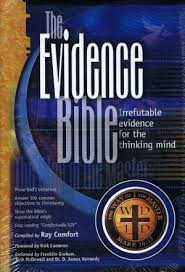
(HT: The Evidence Bible)


A Living Sacrifice


"Offer up spiritual sacrifices acceptable to God through Jesus Christ" (1 Pet. 2:5).

In Romans 12:1 Paul pleads with believers to present their bodies to God as a living and holy sacrifice, which is an appropriate and acceptable act of worship. But as someone has rightly said, the problem with living sacrifices is they tend to crawl off the altar. That's because sacrificial living demands spiritual discipline and constant dependence on the Holy Spirit. We as Christians aren't always willing to do that.

According to Paul, the motivation and ability for self-sacrifice are found in the mercies we've already experienced in Christ. In Romans 1-11 he mentions several, including love, grace, peace, faith, comfort, power, hope, patience, kindness, glory, honor, righteousness, forgiveness, reconciliation, justification, security, eternal life, freedom, resurrection, sonship, intercession, and the Holy Spirit. Because you've received all that, you should gladly surrender every faculty you have for holy purposes.

"Body" in Romans 12:1 also includes your mind. Verse 2 says, "Do not be conformed to this world, but be transformed by the renewing of your mind, that you may prove what the will of God is, that which is good and acceptable and perfect." A transformed mind is the key to transformed behavior.

Prior to your salvation, you had neither the desire nor the ability to make such a sacrifice. But because you are a new creation in Christ, you are not to "go on presenting the members of your body to sin as instruments of unrighteousness; but . . . as instruments of righteousness to God" (Rom. 6:13). One practical implication? Abstain from sexual immorality. Know how to possess your own body in sanctification and honor (1 Thess. 4:3-4).

You are a holy priest, and your priestly work begins with presenting yourself as a living and holy sacrifice. Is that your desire? Are you a faithful priest? - John MacArthur

(HT: Drawing Near - gty)


Thursday, July 8, 2010

Is Heaven Our Default Destination…or Is Hell?


By Randy Alcorn

The safest road to hell is the gradual one—the gentle slope, soft underfoot, without sudden turnings, without milestones, without signposts. — C. S. Lewis 

Heaven
For every American who believes he’s going to Hell, there are 120 who believe they’re going to Heaven. This optimism stands in stark contrast to Christ’s words in Matthew 7:13-14: “Enter through the narrow gate. For wide is the gate and broad is the road that leads to destruction, and many enter through it. But small is the gate and narrow the road that leads to life, and only a few find it.”

What would keep us out of Heaven is universal: “All have sinned and fall short of the glory of God” (Romans 3:23). Sin separates us from a relationship with God (Isaiah 59:2). God is so holy that he cannot allow sin into his presence: “Your eyes are too pure to look on evil; you cannot tolerate wrong” (Habakkuk 1:13). Because we are sinners, we are not entitled to enter God’s presence. We cannot enter Heaven as we are.

So Heaven is not our default destination. No one goes there automatically. Unless our sin problem is resolved, the only place we will go is our true default destination . . . Hell.

I am addressing this issue now because throughout this book I will talk about being with Jesus in Heaven, being reunited with family and friends, and enjoying great adventures in Heaven. The great danger is that readers will assume they are headed for Heaven. Judging by what’s said at most funerals, you’d think nearly everyone’s going to Heaven, wouldn’t you? But Jesus made it clear that most people are not going to Heaven: “Small is the gate and narrow the road that leads to life, and only a few find it.”

We dare not “wait and see” when it comes to what’s on the other side of death. We shouldn’t just cross our fingers and hope that our names are written in the Book of Life (Revelation 21:27). We can know, we should know, before we die. And because we may die at any time, we need to know now—not next month or next year. “Why, you do not even know what will happen tomorrow. What is your life? You are a mist that appears for a little while and then vanishes” (James 4:14).

It’s of paramount importance to make sure you are going to Heaven, not Hell. The voice that whispers, “There’s no hurry; put this book down; you can always think about it later,” is not God’s voice. He says, “Now is the day of salvation” (2 Corinthians 6:2) and “Choose for yourselves this day whom you will serve” (Joshua 24:15).

Hell: Heaven’s Awful Alternative

Hell will be inhabited by people who haven’t received God’s gift of redemption in Christ (Revelation 20:12-15). After Christ returns, there will be a resurrection of believers for eternal life in Heaven and a resurrection of unbelievers for eternal existence in Hell (John 5:28-29). The unsaved—everyone whose name is not written in the Lamb’s Book of Life—will be judged by God according to the works they have done, which have been recorded in Heaven’s books (Revelation 20:12-15). Because those works include sin, people on their own, without Christ, cannot enter the presence of a holy and just God and will be consigned to a place of everlasting destruction (Matthew 13:40-42). Christ will say to those who are not covered by his blood, “Depart from me, you who are cursed, into the eternal fire prepared for the devil and his angels” (Matthew 25:41).

Hell will not be like it’s often portrayed in comic strips, a giant lounge where between drinks people tell stories of their escapades on Earth. Rather, it will be a place of utter misery (Matthew 13:42; 13:50; 22:13; 24:51; 25:30; Luke 13:28). It will be a place of conscious punishment for sins, with no hope of relief. This is why Dante, in the Inferno, envisioned this sign chiseled above Hell’s gate: “Abandon every hope, you who enter.”

The reality of Hell should break our hearts and take us to our knees and to the doors of those without Christ. Today, however, even among many Bible believers, Hell has become “the H word,” seldom named, rarely talked about. It doesn’t even appear in many evangelistic booklets. It’s common to deny or ignore the clear teaching of Scripture about Hell. Hell seems disproportionate, a divine overreaction. In the words of one professor and contributor to an evangelical publication, “I consider the concept of hell as endless torment in body and mind an outrageous doctrine. . . . How can Christians possibly project a deity of such cruelty and vindictiveness whose ways include inflicting everlasting torture upon his creatures, however sinful they may have been? Surely a God who would do such a thing is more nearly like Satan than like God.”

Many imagine that it is civilized, humane, and compassionate to deny the existence of an eternal Hell, but in fact it is arrogant that we, as creatures, would dare to take what we think is the moral high ground in opposition to what God the Creator has clearly revealed. We don’t want to believe that any others deserve eternal punishment, because if they do, so do we. But if we understood God’s nature and ours, we would be shocked not that some people could go to Hell (where else would sinners go?), but that any would be permitted into Heaven. Unholy as we are, we are disqualified from saying that infinite holiness doesn’t demand everlasting punishment. By denying the endlessness of Hell, we minimize Christ’s work on the cross. Why? Because we lower the stakes of redemption. If Christ’s crucifixion and resurrection didn’t deliver us from an eternal Hell, his work on the cross is less heroic, less potent, less consequential, and thus less deserving of our worship and praise. As theologian William G. T. Shedd put it, “The doctrine of Christ’s vicarious atonement logically stands or falls with that of eternal punishment.” Satan has obvious motives for fueling our denial of eternal punishment: He wants unbelievers to reject Christ without fear; he wants Christians to be unmotivated to share Christ; and he wants God to receive less glory for the radical nature of Christ’s redemptive work.

What Did Jesus Say about Hell?

Many books deny Hell. Some embrace universalism, the belief that all people will ultimately be saved. Some consider Hell to be the invention of wild-eyed prophets obsessed with wrath. They argue that Christians should take the higher road of Christ’s love. But this perspective overlooks a conspicuous reality: In the Bible, Jesus says more than anyone else about Hell (Matthew 10:28; 13:40-42; Mark 9:43-44). He refers to it as a literal place and describes it in graphic terms—including raging fires and the worm that doesn’t die. Christ says the unsaved “will be thrown outside, into the darkness, where there will be weeping and gnashing of teeth” (Matthew 8:12). In his story of the rich man and Lazarus, Jesus taught that in Hell, the wicked suffer terribly, are fully conscious, retain their desires and memories and reasoning, long for relief, cannot be comforted, cannot leave their torment, and are bereft of hope (Luke 16:19-31). The Savior could not have painted a more bleak or graphic picture.

How long will Hell last? “They will go away to eternal punishment,” Jesus said of the unrighteous, “but the righteous to eternal life” (Matthew 25:46). Here, in the same sentence, Christ uses the same word translated “eternal” (aionos) to describe the duration of both Heaven and Hell. Thus, if Heaven will be consciously experienced forever, Hell must be consciously experienced forever.

C. S. Lewis said, “I have met no people who fully disbelieved in Hell and also had a living and life-giving belief in Heaven.” The biblical teaching on both destinations stands or falls together.

If I had a choice, that is if Scripture were not so clear and conclusive, I would certainly not believe in Hell. Trust me when I say I do not want to believe in it. But if I make what I want—or what others want—the basis for my beliefs, then I am a follower of myself and my culture, not a follower of Christ. “There seems to be a kind of conspiracy,” writes novelist Dorothy Sayers, “to forget, or to conceal, where the doctrine of hell comes from. The doctrine of hell is not ‘mediaeval priestcraft’ for frightening people into giving money to the church: it is Christ’s deliberate judgment on sin. . . . We cannot repudiate Hell without altogether repudiating Christ.” In The Problem of Pain, C. S. Lewis writes of Hell, “There is no doctrine which I would more willingly remove from Christianity than this, if it lay in my power. But it has the full support of Scripture and, specially, of our Lord’s own words; it has always been held by Christendom; and it has the support of reason.”

Is It Unloving to Speak of Hell?

If you were giving some friends directions to Denver and you knew that one road led there but a second road ended at a sharp cliff around a blind corner, would you talk only about the safe road? No. You would tell them about both, especially if you knew that the road to destruction was wider and more traveled. In fact, it would be terribly unloving not to warn them about that other road.

For the same reason, we must not believe Satan’s lie that it’s unloving to speak to people about Hell. The most basic truth is that there are only two possible destinations after death: Heaven and Hell. Each is just as real and just as eternal as the other. Unless and until we surrender our lives to Jesus Christ, we’re headed for Hell. The most loving thing we can do for our friends and our family is to warn them about the road that leads to destruction and tell them about the road that leads to life.

It would upset us, but would we think it unloving if a doctor told us we had a potentially fatal cancer? And would the doctor not tell us if the cancer could be eradicated? Why then do we not tell unsaved people about the cancer of sin and evil and how the inevitable penalty of eternal destruction can be avoided by the atoning sacrifice of Jesus Christ?

Teresa of Avila, a sixteenth-century Carmelite nun, had an agonizing vision of Hell. She later wrote of the torment she endured:

I was terrified by all this, and, though it happened nearly six years ago, I still am as I write: even as I sit here, fear seems to be depriving my body of its natural warmth. I never recall any time when I have been suffering trials or pains and when everything that we can suffer on earth has seemed to me of the slightest importance by comparison with this. . . . It has been of the greatest benefit to me, both in taking from me all fear of the tribulations and disappointments of this life and also in strengthening me to suffer them and to give thanks to the Lord, Who, as I now believe, has delivered me from such terrible and never-ending torments.

If we understood Hell even the slightest bit, none of us would ever say, “Go to Hell.” It’s far too easy to go to Hell. It requires no change of course, no navigational adjustments. We were born with our autopilot set toward Hell. It is nothing to take lightly—Hell is the single greatest tragedy in the universe. God loves us enough to tell us the truth—there are two eternal destinations, not one, and we must choose the right path if we are to go to Heaven. All roads do not lead to Heaven. Only one does: Jesus Christ. He said, “No one comes to the Father except through me” (John 14:6). All other roads lead to Hell. The high stakes involved in the choice between Heaven and Hell will cause us to appreciate Heaven in deeper ways, never taking it for granted, and always praising God for his grace that delivers us from what we deserve and grants us forever what we don’t.

Earth: The In-Between World

God and Satan are not equal opposites. Likewise, Hell is not Heaven’s equal opposite. Just as God has no equal as a person, Heaven has no equal as a place.

Hell will be agonizingly dull, small, and insignificant, without company, purpose, or accomplishment. It will not have its own stories; it will merely be a footnote on history, a crack in the pavement. As the new universe moves gloriously onward, Hell and its occupants will exist in utter inactivity and insignificance, an eternal non-life of regret and—perhaps—diminishing personhood.

Scripture says of those who die without Jesus, “They will be punished with everlasting destruction and shut out from the presence of the Lord and from the majesty of his power” (2 Thessalonians 1:9). Because God is the source of all good, and Hell is the absence of God, Hell must also be the absence of all good. Likewise, community, fellowship, and friendship are good, rooted in the triune God himself. But in the absence of God, Hell will have no community, no camaraderie, no friendship. I don’t believe Hell is a place where demons take delight in punishing people and where people commiserate over their fate. More likely, each person is in solitary confinement, just as the rich man is portrayed alone in Hell (Luke 16:22-23). Misery loves company, but there will be nothing to love in Hell.

Earth is an in-between world touched by both Heaven and Hell. Earth leads directly into Heaven or directly into Hell, affording a choice between the two. The best of life on Earth is a glimpse of Heaven; the worst of life is a glimpse of Hell. For Christians, this present life is the closest they will come to Hell. For unbelievers, it is the closest they will come to Heaven.

The reality of the choice that lies before us in this life is both wonderful and awful. Given the reality of our two possible destinations, shouldn’t we be willing to pay any price to avoid Hell and go to Heaven? And yet, the price has already been paid. “You were bought at a price” (1 Corinthians 6:20). The price paid was exorbitant—the shed blood of God’s Son, Jesus Christ.

Consider the wonder of it: God determined that he would rather go to Hell on our behalf than live in Heaven without us. He so much wants us not to go to Hell that he paid a horrible price on the cross so that we wouldn’t have to.

As it stands, however, apart from Christ, our eternal future will be spent in Hell. Jesus asks a haunting question in Mark 8:36-37: “What good is it for a man to gain the whole world, yet forfeit his soul? Or what can a man give in exchange for his soul?” The price has been paid. But still, we must choose. Like any gift, forgiveness can be offered, but it isn’t ours until we choose to receive it. A convicted criminal can be offered a pardon by the governor, but if he or she rejects the pardon, it’s not valid.


A pardon must be accepted. Similarly, Christ offers each of us the gift of forgiveness and eternal life—but just because the offer is made doesn’t make it ours. To have it, we must choose to accept it

For more information on the subject of Heaven, see Randy Alcorns book Heaven.

(HT: EPM)

The Old Cross and the New


All unannounced and mostly undetected there has come in modern times a new cross into popular evangelical circles. It is like the old cross, but different: the likenesses are superficial; the differences, fundamental. From this new cross has sprung a new philosophy of the Christian life, and from that new philosophy has come a new evangelical technique-a new type of meeting and a new kind of preaching. This new evangelism employs the same language as the old, but its content is not the same and its emphasis not as before.

The old cross would have no truck with the world. For Adam's proud flesh it meant the end of the journey. It carried into effect the sentence imposed by the law of Sinai. The new cross is not opposed to the human race; rather, it is a friendly pal and, if understood aright, it is the source of oceans of good clean fun and innocent enjoyment. It lets Adam live without interference. His life motivation is unchanged; he still lives for his own pleasure, only now he takes delight in singing choruses and watching religious movies instead of singing bawdy songs and drinking hard liquor. The accent is still on enjoyment, though the fun is now on a higher plane morally if not intellectually.

The new cross encourages a new and entirely different evangelistic approach. The evangelist does not demand abnegation of the old life before a new life can be received. He preaches not contrasts but similarities. He seeks to key into public interest by showing that Christianity makes no unpleasant demands; rather, it offers the same thing the world does, only on a higher level. Whatever the sin-mad world happens to be clamoring after at the moment is cleverly shown to be the very thing the gospel offers, only the religious product is better.

The new cross does not slay the sinner, it redirects him. It gears him into a cleaner and jollier way of living and saves his self-respect. To the self-assertive it says, "Come and assert yourself for Christ." To the egotist it says, "Come and do your boasting in the Lord." To the thrill seeker it says, "Come and enjoy the thrill of Christian fellowship." The Christian message is slanted in the direction of the current vogue in order to make it acceptable to the public.

The philosophy back of this kind of thing may be sincere but its sincerity does not save it from being false. It is false because it is blind. It misses completely the whole meaning of the cross.

The old cross is a symbol of death. It stands for the abrupt, violent end of a human being. The man in Roman times who took up his cross and started down the road had already said good-by to his friends. He was not coming back. He was going out to have it ended. The cross made no compromise, modified nothing, spared nothing; it slew all of the man, completely and for good. It did not try to keep on good terms with its victim. It struck cruel and hard, and when it had finished its work, the man was no more.

The race of Adam is under death sentence. There is no commutation and no escape. God cannot approve any of the fruits of sin, however innocent they may appear or beautiful to the eyes of men. God salvages the individual by liquidating him and then raising him again to newness of life.

That evangelism which draws friendly parallels between the ways of God and the ways of men is false to the Bible and cruel to the souls of its hearers. The faith of Christ does not parallel the world, it intersects it. In coming to Christ we do not bring our old life up onto a higher plane; we leave it at the cross. The corn of wheat must fall into the ground and die.

We who preach the gospel must not think of ourselves as public relations agents sent to establish good will between Christ and the world. We must not imagine ourselves commissioned to make Christ acceptable to big business, the press, the world of sports or modern education. We are not diplomats but prophets, and our message is not a compromise but an ultimatum.

God offers life, but not an improved old life. The life He offers is life out of death. It stands always on the far side of the cross. Whoever would possess it must pass under the rod. He must repudiate himself and concur in God's just sentence against him.

What does this mean to the individual, the condemned man who would find life in Christ Jesus? How can this theology be translated into life? Simply, he must repent and believe. He must forsake his sins and then go on to forsake himself. Let him cover nothing, defend nothing, excuse nothing. Let him not seek to make terms with God, but let him bow his head before the stroke of God's stern displeasure and acknowledge himself worthy to die.

Having done this let him gaze with simple trust upon the risen Saviour, and from Him will come life and rebirth and cleansing and power. The cross that ended the earthly life of Jesus now puts an end to the sinner; and the power that raised Christ from the dead now raises him to a new life along with Christ.

To any who may object to this or count it merely a narrow and private view of truth, let me say God has set His hallmark of approval upon this message from Paul's day to the present. Whether stated in these exact words or not, this has been the content of all preaching that has brought life and power to the world through the centuries. The mystics, the reformers, the revivalists have put their emphasis here, and signs and wonders and mighty operations of the Holy Ghost gave witness to God's approval.

Dare we, the heirs of such a legacy of power, tamper with the truth? Dare we with our stubby pencils erase the lines of the blueprint or alter the pattern shown us in the Mount? May God forbid. Let us preach the old cross and we will know the old power.

A. W. Tozer, Man, the Dwelling Place of God, 1966

(HT:  Lambert Dolphin)

Wednesday, July 7, 2010

Jesus Christ Is Everything, or He Is Nothing


By Justin Edwards


 “I know your works, that you are neither cold nor hot. I could wish you were cold or hot. So then, because you are lukewarm, and neither cold nor hot, I will vomit you out of My mouth. - Jesus in Revelation 3:15-16

For the grace of God that brings salvation has appeared to all men, teaching us that, denying ungodliness and worldly lusts, we should live soberly, righteously, and godly in the present age,  looking for the blessed hope and glorious appearing of our great God and Savior Jesus Christ,  who gave Himself for us, that He might redeem us from every lawless deed and purify for Himself His own special people, zealous for good works. - Titus 2:11-14


If then you were raised with Christ, seek those things which are above, where Christ is, sitting at the right hand of God. Set your mind on things above, not on things on the earth. For you died, and your life is hidden with Christ in God. When Christ who is our life appears, then you also will appear with Him in glory.

Therefore put to death your members which are on the earth: fornication, uncleanness, passion, evil desire, and covetousness, which is idolatry. Because of these things the wrath of God is coming upon the sons of disobedience, in which you yourselves once walked when you lived in them.

But now you yourselves are to put off all these: anger, wrath, malice, blasphemy, filthy language out of your mouth. Do not lie to one another, since you have put off the old man with his deeds,  and have put on the new man who is renewed in knowledge according to the image of Him who created him, where there is neither Greek nor Jew, circumcised nor uncircumcised, barbarian, Scythian, slave nor free, but Christ is all and in all. - Colossians 3:1-11


“If anyone comes to Me and does not hate his father and mother, wife and children, brothers and sisters, yes, and his own life also, he cannot be My disciple. And whoever does not bear his cross and come after Me cannot be My disciple...whoever of you does not forsake all that he has cannot be My disciple. - Jesus in Luke 14:26-33

You Might Also Like

Related Posts Plugin for WordPress, Blogger...